
The Crowd Size Myth
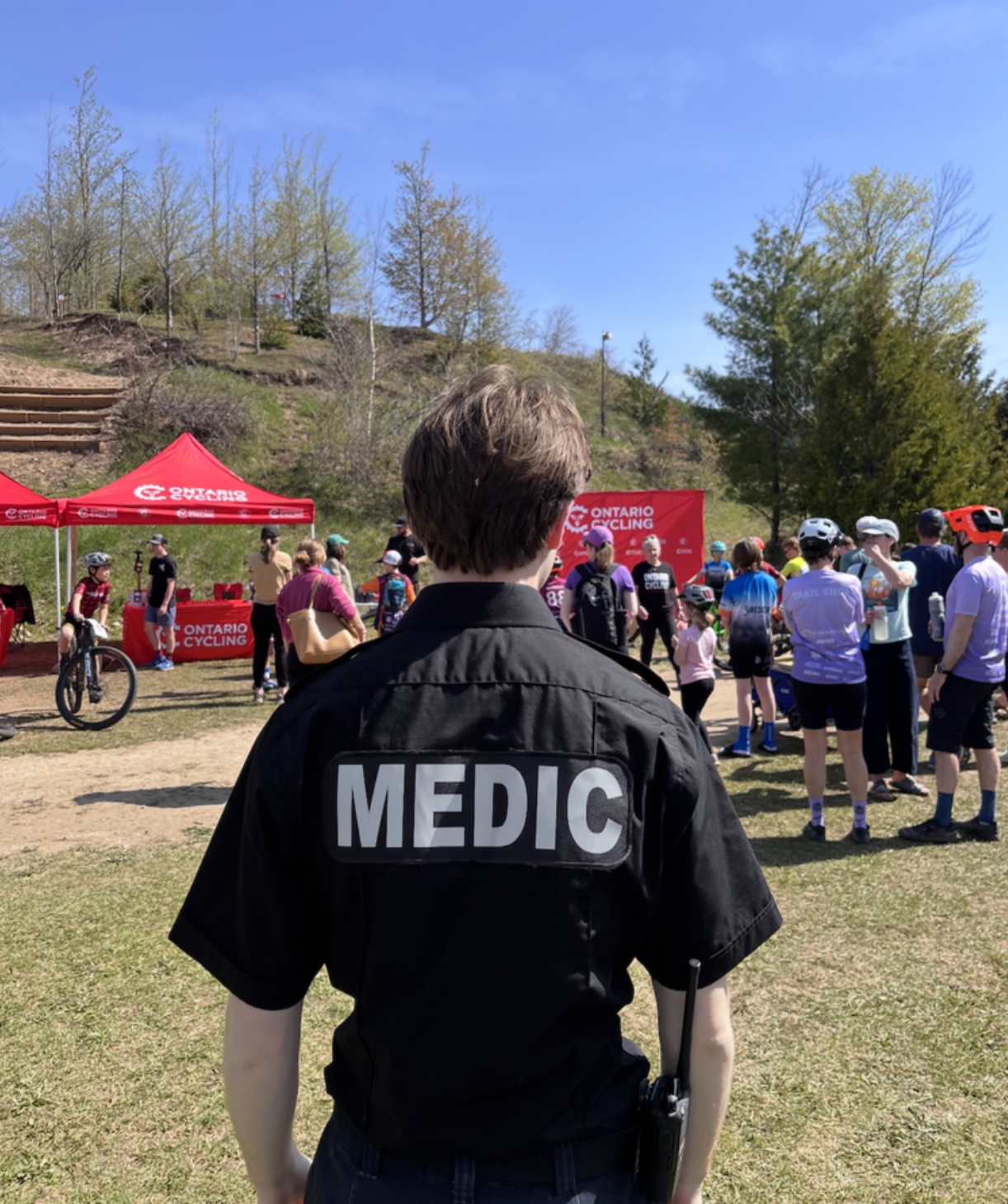
A crowd of 500 can present greater medical challenges than a crowd of 5,000. Understanding why begins with looking beyond attendance alone.
Ask most event organizers how they think about medical risk, and the conversation starts with headcount. How many people are coming? That number then drives everything: how many first aiders, how many stations, whether an ambulance is needed. It is an intuitive framework and a reasonable starting point.
It is also, on its own, not very useful.
Crowd size predicts medical demand less reliably than most organizers assume. Research into mass gathering medicine has consistently found that the factors most strongly associated with patient presentation rates are not primarily about how many people attend. They are about what those people are doing, where they are doing it, and under what conditions.
What the Research Actually Shows
A study conducted across a southeastern U.S. university community, published in the journal Internal and Emergency Medicine, analyzed mass gathering events over a nearly two-year period. The researchers used statistical modeling to identify which factors predicted patient presentation rates while controlling for crowd size. The results were instructive.
Outside venues were associated with a patient presentation rate three times higher than indoor venues. Unbounded venues, meaning open spaces without defined perimeters, showed a similarly elevated rate. The absence of free water and the absence of climate control were both significant predictors. A higher heat index was strongly associated with increased presentations. Crowd size, when these other factors were accounted for, was not the dominant driver.
An earlier foundational study drawing on data from more than twelve million attendees across 201 events found a similar pattern. Weather, specifically humidity, crowd mobility, and whether the venue was enclosed, all influenced medical demand in ways that crowd count alone could not capture. The prediction of patient load at events, the researchers concluded, is complex and multifactorial.
What this means practically is that two events with identical attendance can have dramatically different medical demands based on factors that have nothing to do with how many tickets were sold.
The Variables That Actually Matter
If crowd size is an incomplete predictor, what should organizers be paying attention to?
Venue type and configuration. Outdoor unbounded events consistently generate more medical presentations than indoor or bounded equivalents. This is partly environmental, outdoor venues offer no protection from heat, sun, or weather, and partly operational, access to patients in open-field settings is often more complicated than in a defined stadium or arena. A festival spread across thirty acres presents fundamentally different medical access challenges than a theater holding the same number of people.
Heat index, not just temperature. The research is consistent that humidity is a stronger predictor of medical demand than temperature alone. Heat index, which combines both, is a more reliable planning input. An event on a humid day with a moderate temperature can generate higher medical demand than an event on a hotter but drier day.
Free water availability. The absence of readily available water is independently associated with higher presentation rates. This is not surprising physiologically, dehydration compounds heat stress and lowers the threshold for other medical problems, but it is often treated as a logistics question rather than a medical one.
Event type and physical demand. Football events, in the U.S. research, had the highest patient presentation rates among the categories studied, followed by public exhibitions, concerts, and non-football athletic events. The nature of what people are doing at an event, standing in place, walking long distances, competing physically, sitting in a specific seat, shapes what goes wrong and how often.
Crowd mobility. A crowd that moves freely generates different medical patterns than a seated audience or a stationary crowd at a barrier. Mobility affects both who gets hurt and how long it takes to reach them.
Why the Headcount Shortcut Persists
The persistence of crowd size as the primary planning variable is understandable. It is a number that is known in advance, easy to communicate, and maps neatly to a budget. The other variables are less tidy. Heat index on event day is a forecast, not a certainty. Venue configuration involves judgment calls. Crowd mobility depends on how the event actually unfolds.
But using a simple metric because it is convenient is not the same as using it because it is accurate. An event with 2,000 people on a humid August afternoon in an open field with no shade and limited water has a meaningfully different medical risk profile than an event with 8,000 people in a covered arena on a mild evening in May. Planning both events the same way because one has a larger headcount gets the analysis backwards.
The practical implication is not that crowd size is irrelevant. It is that crowd size should be one input among several, weighted against the factors that research has shown to be stronger predictors of demand. An honest medical plan reflects the actual risk environment of the specific event, not a generic formula applied to a ticket count.
Building a More Complete Picture
For organizers accustomed to starting with headcount, the adjustment is not complicated but it does require a deliberate shift in how questions get asked during planning.
Rather than "how many people are coming," the more productive opening question is "what is the environment these people will be in, and what are they going to be doing?" From there, the medical plan can be calibrated to the actual risk profile: the venue layout and accessibility, the forecast conditions, the physical demands on participants, the availability of water and shade, the likely demographic mix, and the distance to definitive care.
The events that get medical planning right are not necessarily the ones with the most resources. They are the ones that started with an accurate picture of what they were planning for.
The Aventry Journal is published by Aventry Medical. Articles represent editorial perspectives on event safety and are intended to inform practice, not to constitute medical or legal advice.