
How Many Medical Staff Do I Need for My Event?
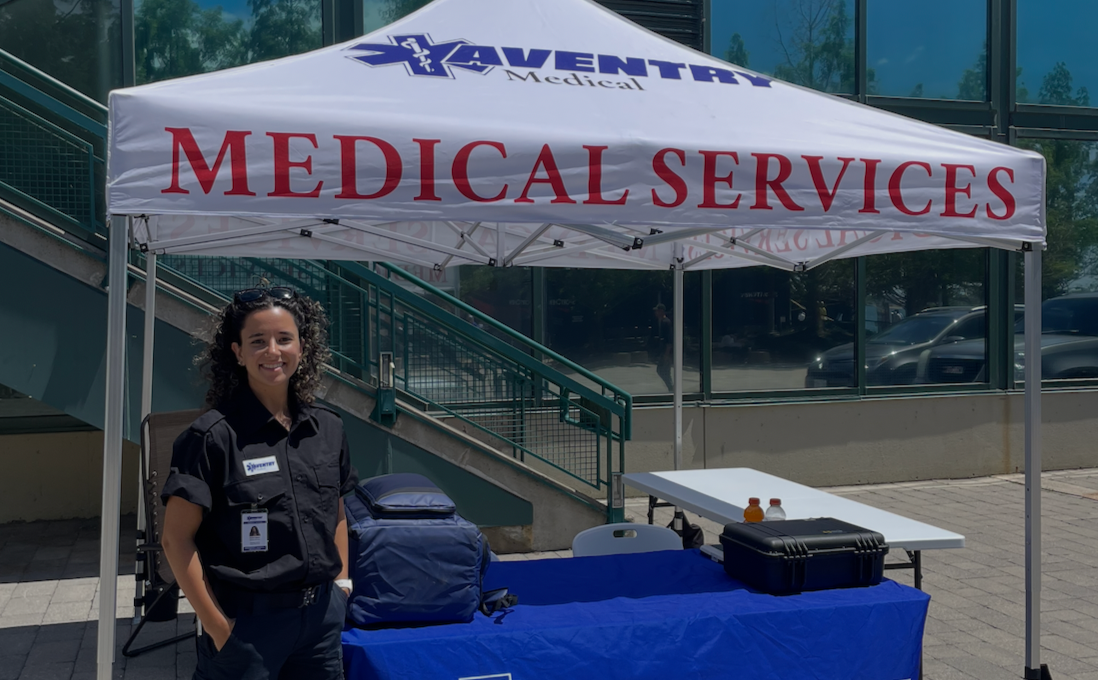
Aventry medic Rahaf providing on-site event medical coverage at an event in downtown Toronto.
If you're planning an event, there's a good chance you've spent countless hours thinking about logistics. You're coordinating vendors, booking venues, managing registrations, recruiting volunteers, arranging permits, and solving a hundred small problems that attendees will never even notice.
Medical coverage is often not at the top of that list.
That's understandable. Most events never experience a major emergency. But that doesn't mean medical incidents are rare. In our experience, almost every large event will have someone who needs assistance, whether it's a participant dealing with heat exhaustion, a spectator who takes a fall, a volunteer feeling unwell, or an athlete who suffers an injury. Most of these situations aren't life-threatening, but they still require a timely and professional response.
One of the biggest misconceptions we see is the belief that calling 911 is a complete medical plan. Emergency services play a critical role in our healthcare system, but they are designed to respond after an emergency occurs. When someone gets hurt or becomes ill at your event, the first few minutes matter. Having trained medical personnel already on site means assessment and treatment can begin immediately, long before an ambulance arrives.
Many organizers also assume that medical coverage is only necessary for very large events. In reality, risk is determined by much more than attendance numbers. A 300-person road race on a hot July afternoon may generate more medical calls than a 2,000-person indoor conference. The type of event, the activities taking place, the weather, the age of participants, and the layout of the venue often have a much greater impact on medical risk than the size of the crowd alone.
Think about your event from the perspective of a participant. If someone twists an ankle, experiences an allergic reaction, develops chest pain, or collapses from heat-related illness, what happens next? Who responds? Where are they taken? Who makes the decision to call an ambulance? These are not questions most organizers want to answer in the moment. The best time to think about them is during the planning process.
Good event medical coverage is about far more than responding to worst-case scenarios. In fact, the majority of patient interactions at events are relatively minor. A runner needs help cooling down after a race. A child requires basic first aid. A volunteer becomes dehydrated after spending hours in the sun. These situations may not make headlines, but handling them quickly and professionally can make a significant difference to the experience and safety of everyone involved.
We've found that the most successful events are usually the ones where medical teams are integrated into the operation rather than treated as an afterthought. Organizers know who their medical personnel are, where they're located, and how to contact them. Medical teams understand the event layout, the schedule, and the unique risks associated with the day. When everyone is working together, incidents are managed more effectively and organizers can focus on running the event.
Ultimately, the question isn't simply whether your event needs medical coverage. The better question is whether you have a plan if someone gets hurt.
For many events, professional medical coverage is one of the simplest and most effective ways to ensure that plan exists.
At Aventry Medical, we provide professional event medical coverage for sporting events, festivals, corporate activations, film productions, and community events across Ontario. If you're unsure what level of medical coverage your event requires, we're always happy to discuss your event and help you determine the best approach.
The Aventry Journal is published by Aventry Medical. Articles represent editorial perspectives on event safety and are intended to inform practice, not to constitute medical or legal advice.